
Sequence of returns risk refers to the idea that when market gains and losses happen can matter just as much as how much they average over time.
This concept is especially important in retirement, when many people begin taking income from their investments instead of adding to them.
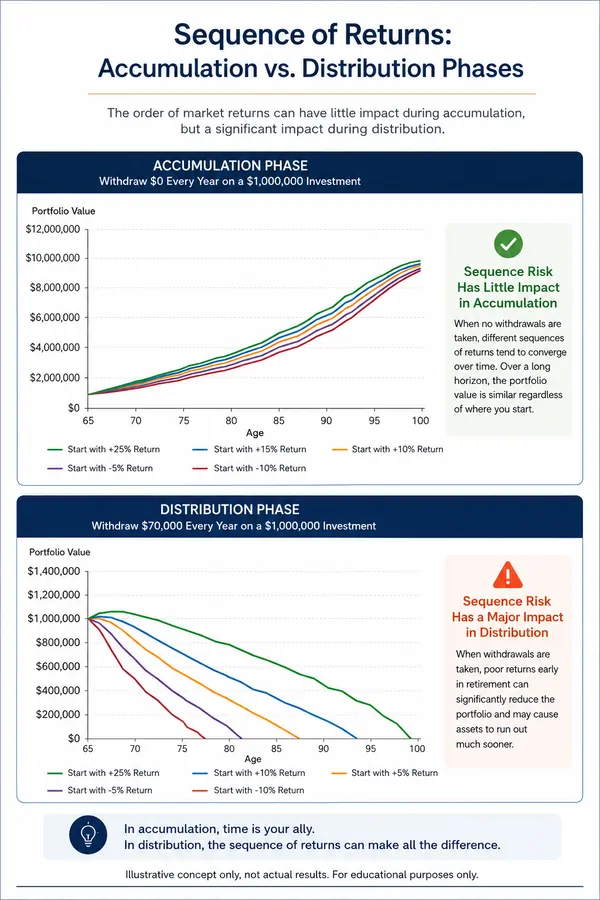
During your working years, market downturns can be uncomfortable but often temporary because you are still contributing. In retirement, the situation changes. Withdrawals begin, and timing becomes more important.
Why Timing Matters
If markets decline early in retirement, retirees may be forced to withdraw money from a portfolio that is already down. This creates a double impact: investments lose value and withdrawals reduce the remaining balance at the same time.
Even if markets recover later, the portfolio may have less money left to benefit from that recovery. Over time, this can affect how long savings last.
In contrast, strong market performance early in retirement can help a portfolio remain more resilient, even if downturns occur later.
The Impact on Retirement Plans
Sequence of returns risk does not mean markets are unsafe. It simply highlights that withdrawals change how market volatility affects outcomes.
Research has shown that retirees who experience poor market performance in the early years of retirement face a higher likelihood of depleting savings later, particularly when using fixed withdrawal strategies.
Because withdrawals continue regardless of market conditions, selling assets at lower prices can create lasting effects.
Ways People Manage Sequence Risk
There is no single solution, but many retirement strategies aim to reduce the pressure on investments during market downturns. Common approaches include maintaining cash reserves, adjusting withdrawal rates, diversifying income sources, and creating dependable income streams that are not tied directly to market performance.
The goal is not to avoid market risk entirely, but to avoid being forced to make difficult decisions at the wrong time.
A Simple Way to Think About It
Accumulation is about average returns.
Retirement income is about timing.
Sequence of returns risk highlights that difference.
Understanding this concept can help you design a plan that supports both growth and stability, so market fluctuations have less influence on day-to-day spending decisions.